Trading Psychology
FOMO: Stop Chasing the Trade
Feel the urgency. Follow the process.
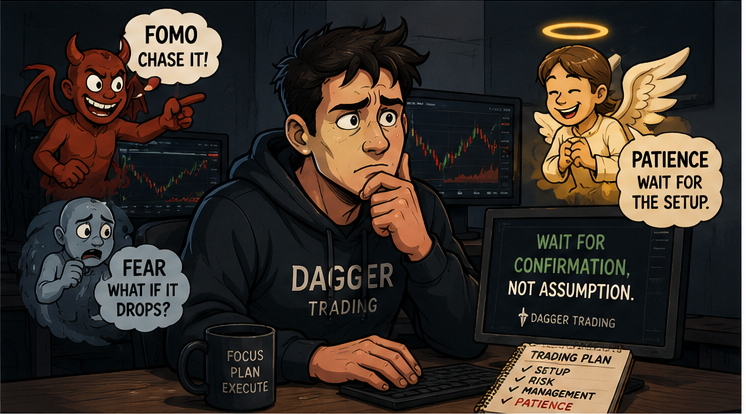
1. How the Pattern Develops
A move starts without you. You feel late.
You feel pressure to act now.
The plan gets replaced by emotion.
You chase instead of waiting.
Every tick suddenly feels important.
Return to your setup, risk and plan.
2. Process vs. Emotion
| Disciplined Process | Emotional Process | |
|---|---|---|
| Question | ✓ Does this fit my setup? | ✕ What if I miss it? |
| Entry | ✓ Waits for confirmation | ✕ Chases movement |
| Risk | ✓ Defined before entry | ✕ Decided while emotional |
| Loss | ✓ Accepts it as possible | ✕ Takes it personally |
| Patience | ✓ Can stay flat | ✕ Needs action |
| Focus | ✓ Process and execution | ✕ Immediate P&L |
3. Quick Reset
- Pause: Is this trade actually in the plan?
- Risk: Is size defined before entry?
- Evidence: What confirms the setup?
- Invalidation: Where am I wrong?
- Choice: Can I comfortably skip this trade?
4. Outcome ≠ Decision Quality
You followed the setup and controlled risk. The outcome does not erase the quality of the decision.
A lucky result can reinforce a bad habit. A win does not make an impulsive decision disciplined.
5. Warning Signs
- Entering because price is moving fast
- Feeling that you must participate
- Changing the plan after entry
- Watching every tick with rising anxiety
- Taking another trade just to feel better
- Letting one outcome define your confidence
6. Key Takeaway
Your edge needs rules around it. The goal is not perfect execution—it is noticing when you drift and returning to the process.
7. Go Deeper (optional reading)
The deeper lesson
FOMO is dangerous because it can feel logical in the moment. Price is moving, other traders seem to be participating, and waiting can feel like losing an opportunity. But when that urgency changes your entry, size, stop or setup criteria, the trade is no longer being driven by your plan. The goal is not to eliminate FOMO. The goal is to recognize when observation turns into urgency and keep urgency from getting the final vote.
A simple practice
Before the next order, write down the setup, confirmation, invalidation and risk. If price runs without giving you the entry you planned, practice letting it go. After the trade—or the trade you skipped—review whether you followed the process. Remember: a chased trade that wins can be more dangerous than one that loses because the profit can reinforce the bad habit. Grade the decision first and the outcome second.
Educational content only. This lesson is designed to improve trading process and risk awareness; it does not predict outcomes or provide personalized financial advice.
Run Dagger Check before you act. It can help you catch FOMO before it turns into an impulsive entry.
Open Dagger Check →